


LIUPPAThe Computer Science research laboratory of the University of Pau and Adour countries (UPPA)
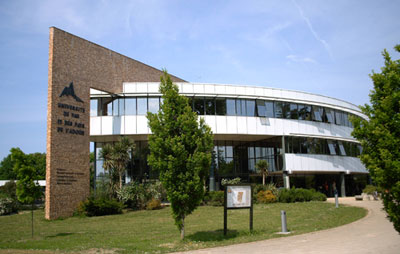
The LIUPPA is the UPPA computer science research laboratory. It addresses digital sciences in the broadest sense. Its research project focuses on the requirements and issues of a digital society in which the Internet (Internet of Things, social networks, etc.) and networks as a whole are increasingly impacting our daily activities. This affects IT systems, which are complex due to:
- Heterogeneous, multimedia and highly decentralized (cloud) data (in larger and larger volumes).
- Distributed and outsourced data processing.
- Different users (machines, humans) whose profiles and requirements differ and evolve.
In this context, even the interactions with and among these users need to be redefined to achieve better communication and more efficient cooperation.
The solutions put forward by the LIUPPA fall within the scope of two complementary areas:
- Information sciences and technologies based on information, knowledge and web data processing (data, documents, etc.).
- Software engineering centered on model, service and software architecture engineering.
This includes cross-functional issues related to security, image/signal processing and visualization, distributed systems, interaction and adaptation. The figure below summarizes this work.
The LIUPPA is organized into four teams:
- Cyber-Physical Systems Architecture (ASCP): aims to address problems mainly related to: the management of data semantics (mainly related to security and privacy) within the SCP, the design of system architectures, and the control of exchanges between equipment. The team's approach is holistic, in that it addresses different aspects of ESCP, drawing in particular on several skills in the areas of: systems engineering for cyber-physical architectures, semantic integration and interoperability (integrating network and security dimensions) and autonomous management of cooperative and collaborative systems.
- Information Processing to Adapt Interaction to the Context and the User (T2I): focuses more specifically on the external and contextual elements of an ESCP. It is dedicated to designing, implementing, and deploying generic, interactive, and adaptive applications. These applications process heterogeneous data from diverse business data sets and require the implementation of original representation models and access methods. The goal is to enhance the value of information and facilitate user interaction by providing the most appropriate information and artifacts.
- Software Engineering (GL): focuses on semi-formal specification and modeling languages (UML, SysML, BPMN, ...) for the design of quality software: maintainability, scalability... The massification of software through their change of scale (composition, entanglement...) and their new nature (cloud, big data, cyber-physical...) requires new design approaches addressed in this team.
- Information Engineering and Security through Knowledge Management (ISI-Know): develops innovative solutions combining artificial intelligence (AI) and advanced data analysis methods to strengthen the security of cyber-physical systems (CPS) and digital environments.